Dating Strategy
Why Busy High Achievers Need a Professional Dating Profile More Than Anyone Else

You would never walk into a board meeting with a slide deck you threw together in five minutes. You would never submit code you knew was buggy just to hit a deadline. You would never show up to a surgical rotation, a fundraising pitch, or a systems design review unprepared. So why is your dating profile — arguably one of the highest-leverage assets in your personal life — running on three blurry photos from a 2019 wedding and a bio that says "I like hiking and good food"?
If you're an engineer, a physician, a founder, or anyone else whose calendar is booked in fifteen-minute increments, this article is for you. Not because you need to be told dating matters — you already know that. It's because the math of your specific situation makes a professional, optimized dating profile worth more to you than it is to almost anyone else. This is the time-savings effect, and once you see it, you won't be able to unsee it.
The Time-Savings Effect: What It Actually Means
Here's the core idea, stripped of fluff: a dating profile is a filtering and attraction system that runs 24 hours a day without requiring your presence. It works while you're in a code review, while you're on rounds, while you're closing a funding round, while you're asleep. For someone with abundant free time, that's a nice convenience. For someone with almost no free time, it's the entire game.
Think about what traditional dating actually requires: going out multiple nights a week, striking up conversations with strangers, following up, going on dates that may lead nowhere, and repeating that cycle dozens of times before finding someone worth investing in. That's a massive time commitment even for people with wide-open schedules. For someone billing 60-70 hour weeks, on call every third night, or running a startup that never really lets them clock out, that traditional funnel isn't just inconvenient — it's practically inaccessible.
A dating profile compresses that entire funnel into something that operates asynchronously. Instead of spending your scarce Friday night at a bar hoping to meet someone interesting, your profile is doing that work for you in the background, sorting through hundreds of potential matches and surfacing the ones worth your time. That's not a minor convenience. That's a fundamentally different way of allocating your most limited resource.
Your profile is the only employee you have that works 24/7, never asks for a raise, and never takes a day off — but only if you've actually trained it to do the job right.
The Opportunity Cost Math High Earners Already Understand — But Don't Apply to Dating
If you're a high earner, you already think in terms of opportunity cost. You know that an hour of your time is worth something specific, and you make decisions accordingly. You pay someone to clean your apartment because your hourly rate makes that math obvious. You pay for a faster flight, a better commute, a service that saves you three hours a week. You do this instinctively in every part of your life except, curiously, the part where it might matter most to your long-term happiness: your dating life.
Let's actually run the numbers, because engineers and finance people respond to numbers better than platitudes. Say you make $150,000 a year in a demanding role. Break that down and your time is worth roughly $75 an hour during working hours — and arguably worth even more during your scarce off-hours, since that time is artificially scarce and therefore more valuable at the margin. Now consider what a mediocre dating profile costs you.
- Low-quality photos mean fewer matches, so you spend more total hours swiping to generate the same number of conversations.
- Fewer matches mean you're more likely to lower your standards just to have someone to talk to, which leads to more first dates that go nowhere.
- Each "going nowhere" date costs you two to three hours of actual time, plus the transit time, plus the mental energy of getting ready and showing up present and engaged.
- Bad first dates also cost you emotional bandwidth you need for your actual job — the one paying for all of this in the first place.
Multiply that out over a few months of mediocre matches and mediocre dates, and you're looking at dozens of hours spent on a process that a sharper, more strategic profile could have filtered down by half or more. That's not a hypothetical — it's the direct, measurable cost of under-investing in the one asset that determines who you even get the chance to meet.
Compare that to the cost of getting your profile right the first time: a few hours for a single photography session, plus some thoughtful editing of your bio and prompts. It's a rounding error next to the hours you'll save downstream. This is the same logic you'd apply to any other investment decision at work — you spend a little upfront to save a lot on the back end. Dating photography is no different. It's infrastructure.
Why Smart, Technical People Often Have the Worst Profiles
Here's an uncomfortable pattern I see constantly working with clients in STEM fields, medicine, and finance: the more competent someone is professionally, the worse their dating profile tends to be. This isn't a coincidence, and it isn't because these people don't care. It's because their entire professional identity has been built on a different value system — one where substance wins and presentation is, at best, an afterthought.
If you're an engineer, you got where you are by being right. Your code either compiles or it doesn't. Your proof either holds or it doesn't. Nobody promoted you because you had a nice smile in a meeting — they promoted you because you solved hard problems. If you're a physician, the same logic applies in an even higher-stakes way: your patients don't care if you're photogenic, they care if you're competent. If you're a founder, you've probably absorbed the "build it and they will come" mentality — obsess over the product, and the rest follows.
The problem is that dating apps do not work like this. Nobody swiping through a dating app has access to your resume, your transcript, your patient outcomes, or your cap table. All they have is a handful of photos and a few lines of text, and they are making a split-second judgment based entirely on presentation. It is, whether you like it or not, the most presentation-driven, least meritocratic system you will interact with all week. The same brain that automatically discounts flashy but shallow work in a technical review will, ironically, reward flashy and shallow profiles on a dating app — because that's genuinely all there is to go on in those first two seconds.
This creates a strange blind spot. Extremely capable people — the kind who would never ship an MVP without testing it, who would never walk into a client meeting unprepared — will use a dating profile made up of a cropped group photo, a blurry gym mirror selfie, and a picture from a work conference where they're wearing a lanyard. They wouldn't dream of representing their actual competence that carelessly in any other domain. But because dating feels "soft" or "unserious" compared to their real work, they let their profile — the actual interface between them and every potential match — go completely unoptimized.
The Competence Trap
There's a specific psychological pattern worth naming here: the belief that competence should be sufficient. If you're used to winning because you're the smartest person in the room, it's natural to assume that dating should eventually work the same way — that if you're a good, accomplished, interesting person, that will somehow come through regardless of your photos. It won't. Not at the top of the funnel. Your substance matters enormously once someone is actually talking to you. But substance can't do anything if nobody swipes right in the first place. Presentation is the gatekeeper for whether your substance ever gets a chance to be evaluated at all.
This is precisely why treating your profile like a resume — not a diary entry — matters so much. Nobody would send a resume with typos and inconsistent formatting to a job they actually wanted. Yet plenty of extremely well-credentialed people send exactly that energy into their dating profile, then wonder why the response rate is low.

Treat Your Profile Like a Professional Asset, Because It Is One
You already understand how to build a strong LinkedIn profile. You know that a professional headshot outperforms a casual selfie. You know that a well-structured summary outperforms a stream-of-consciousness paragraph. You know that specificity — naming real accomplishments, real skills, real outcomes — outperforms vague generalities like "results-driven team player." Somehow, this obvious logic rarely gets applied to the dating profile, even though the stakes are arguably higher and the audience is judging even faster.
A dating profile deserves the same rigor you'd bring to any other asset that represents you to strangers who are deciding, in seconds, whether you're worth their time. That means:
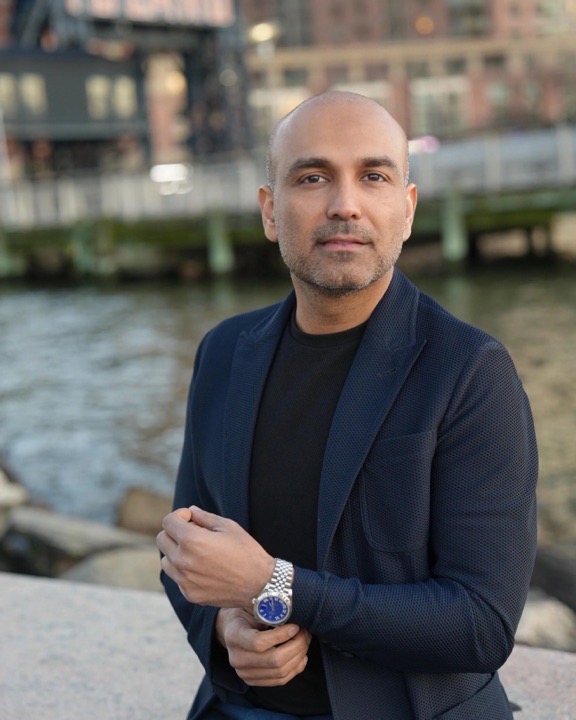
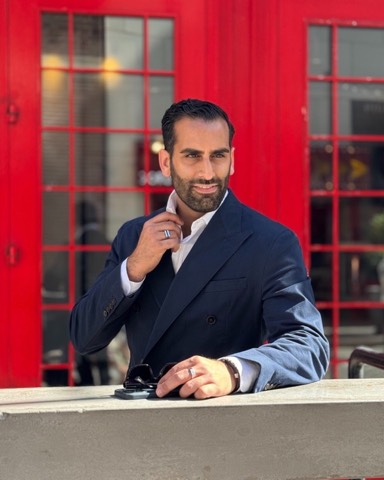
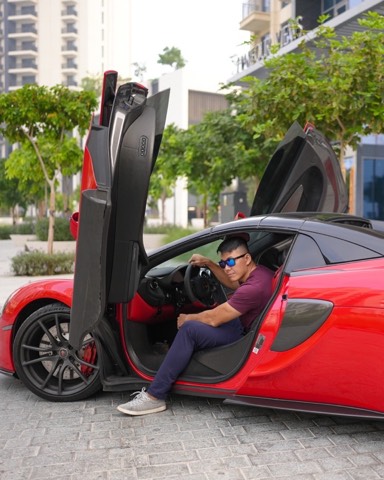
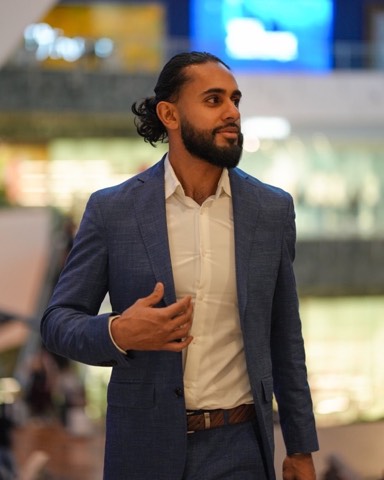
- Photos that are current, high-resolution, and varied — a strong close-up that shows your face clearly, a full-body shot that shows how you carry yourself, a lifestyle shot that hints at your interests, and ideally a shot that shows you in a social or professional context that signals status and ease.
- A sequence that tells a story, not a random dump of whatever's on your camera roll — the same way a good resume orders your experience to build a compelling narrative rather than listing jobs chronologically with no thought to impact.
- A bio that's specific, the same way a strong resume bullet point is specific — not "I love to travel" but a detail that's memorable and gives someone an actual conversation hook.
- Prompts and answers that filter, not just fill space — designed to attract people who are actually compatible with your lifestyle and repel the ones who aren't, so you're not wasting matches on people who were never going to work.
This is exactly where dating photography stops being a vanity purchase and starts being a strategic one. Online dating photography isn't about looking like a different person — it's about accurately representing your best, most authentic self in a format engineered for how dating apps actually get used: fast, visual, and unforgiving of ambiguity. Good dating photography removes the guesswork and the amateur mistakes that quietly tank response rates — bad lighting, awkward angles, outdated images, unclear framing — and replaces them with images that do the specific job of making someone stop scrolling and swipe right.
Why a Generic Photographer Isn't the Same as a Dating Photography Specialist
This is where a lot of high achievers make an efficient-sounding but ultimately costly decision: they hire a general portrait photographer, or worse, ask a friend with a nice camera to snap a few shots at brunch. On paper this looks like the fast, cheap option. In practice, it usually isn't, because a generic photographer is optimizing for the wrong outcome. They're trying to make a technically well-composed photograph. They are not thinking about swipe psychology, App-specific crop ratios, how a photo reads at thumbnail size on a phone screen, or which combination of images statistically produces more matches and better-quality conversations.
That's the real difference between ordinary portrait work and dedicated dating photography — and it's an even bigger difference when the photographer also has real dating-coaching experience, understanding not just how to make you look good in a still image, but how a specific photo performs once it's competing against hundreds of other profiles for a two-second decision. Someone who has coached actual daters through actual conversations and actual first dates understands what happens after the swipe, not just at the moment of the photo. That's the position Vegas Tinder Photography works from — engineering images around the specific psychology of what makes someone swipe right, not just taking technically nice pictures, because Mike brings both 15+ years of professional photography and 14+ years of dating coaching experience to every session.
For a busy professional, this distinction matters even more, because you don't have time to run three different sessions with three different photographers to figure out which approach works. You need it done right the first time, by someone who already understands the mechanics of both the camera and the swipe.
Your Profile Works While You Sleep — But Only If You Build It Right
There's a phrase worth sitting with: your profile works while you sleep. It's not just a nice turn of phrase — it's literally how these platforms function. While you're in an all-day surgery block, your profile is being seen by dozens of people. While you're deep in a sprint before a product launch, your profile is generating matches. While you're on a red-eye flight for a work trip, someone on the other side of town is deciding, based entirely on what you've put in front of them, whether they want to talk to you.
This is the single biggest advantage a dating profile has over literally every other form of dating for a time-constrained professional. Meeting someone at a bar requires you to physically be at the bar, at the right time, and to have the social bandwidth to make a good impression in real time, with no do-overs and no editing. A profile has none of those constraints. It's always "on." It doesn't get tired after a 12-hour shift. It doesn't have an off night. Once it's built well, it performs consistently, night after night, without requiring anything further from you except showing up for the conversations and dates it generates.
But — and this is the part that gets missed constantly — that only works if the profile itself is actually good. A weak profile working 24/7 is still a weak profile. It's just failing more efficiently and more often. If your photos are unclear or unflattering, your profile isn't quietly generating high-quality matches in the background while you work — it's quietly generating low response rates, mismatched conversations, and swipes from people who were never a great fit to begin with. The asymmetry cuts both ways: get it right, and the leverage compounds in your favor every hour of every day. Get it wrong, and you're compounding wasted time and missed connections at the same rate.
This is why the setup phase deserves real attention, even from — especially from — people who don't have much time to give it. A few focused hours spent on professional dating photography and profile strategy is one of the only places in modern dating where the effort-to-outcome ratio is genuinely lopsided in your favor. You do the work once, and it pays out continuously afterward, with no ongoing time investment required to keep it running.
The Compounding Effect of Getting It Right Once
Compare that to almost every other strategy for meeting people, which requires ongoing, repeated time investment: another happy hour, another set-up dinner from a well-meaning coworker, another weekend trip hoping to "meet someone organically." Those approaches aren't bad, but they don't compound. Each one is a one-time roll of the dice that requires you to show up again and again to get another roll.
A well-built profile, by contrast, compounds. Every swipe, every match, every conversation it generates is a return on a single upfront investment. For someone whose calendar genuinely does not have room for "another happy hour," that compounding return is not a nice bonus — it's the entire reason this approach makes sense over any alternative.
The Real Cost Isn't the Session — It's the Months You Lose Without One
It's worth reframing how you think about the cost of professional dating photography altogether. The upfront price of a session is the visible cost, so it's the one people fixate on. But the actual cost that matters is the invisible one: the months spent on a mediocre profile generating mediocre results, while your calendar keeps filling up with work commitments that leave less and less room to fix the problem later.
Every month spent with a weak profile is a month of missed matches, low-quality conversations, and dates that fizzle before they start — multiplied by the fact that, as a busy professional, each of those wasted interactions costs you more than it would cost someone with a wide-open schedule. You're not just losing time. You're losing your most valuable and least renewable resource, in a period of life where you likely have less of it to spare than you will at almost any other point.
This is exactly why it makes sense to treat the profile-building phase the way you'd treat any other high-leverage investment: do it once, do it properly, and let it run. That's the whole premise behind a free strategy call — a low-friction way to figure out, before you spend a single hour or dollar, exactly what your profile needs and whether a session makes sense for your specific situation. It costs you almost nothing in time, and it removes the guesswork that otherwise leads people to either do nothing or throw money at the wrong fix.
What This Looks Like in Practice
For a lot of clients, the shift is less about becoming a different person in front of the camera and more about finally applying their existing standards to an area of life they'd been neglecting. The same person who spends hours refining a pitch deck learns to apply that same care to selecting and sequencing their photos. The same person who wouldn't submit a project without testing it learns to A/B test which primary photo actually performs better. The same person who values data over guesswork starts treating match rate and conversation quality as metrics worth paying attention to, rather than leaving the entire process to chance.
None of this requires becoming someone else. It requires presenting the person you already are — competent, put-together, interesting — in a format that actually works for how modern dating functions. That's the entire value of professional dating photography: it's not about manufacturing a persona, it's about removing the friction between who you actually are and how you're being perceived in the two seconds someone has to decide whether to swipe.
For high achievers specifically, this reframing tends to land immediately, because it's not a foreign concept — it's the same logic they apply everywhere else in their lives, just pointed at a part of life they hadn't gotten around to optimizing yet.
Stop Losing Hours to a Profile That Isn't Pulling Its Weight
If you're reading this because you recognize yourself in it — long hours, real ambition, a dating app history full of low response rates and dates that didn't go anywhere — the fix isn't more time spent swiping harder. It's fixing the asset that's supposed to be doing the work for you in the first place. You don't need more hours in the day. You need your profile to convert the hours you do have into better matches, better conversations, and better dates, without demanding more from your already maxed-out schedule.
That's the entire premise behind Vegas Tinder Photography: photos engineered around the psychology of what actually makes someone swipe right, built by someone who understands both the camera and the dating dynamics on the other side of the screen. If you want to see what that looks like for your specific situation, a free strategy call is the easiest place to start — no pressure, no obligation, just a clear read on where your profile stands and what it would take to turn it into the asset it should be. Your calendar is already full. Let your profile do the work you don't have time to do yourself.
Want photos that actually get results?
Book a free strategy call — we'll map out exactly what your profile needs.
SCHEDULE FREE CONSULTATION