Style & Grooming
The Asian Man's Guide to a Dating Profile That Actually Gets Matches
If you're an Asian man who has spent any time on Tinder, Hinge, or Bumble comparing your match rate to friends of other backgrounds, you've probably already sensed that something in the algorithmic dating pool isn't neutral. You're right — there's real data on this, and dating apps have quietly acknowledged that swipe behavior isn't evenly distributed across ethnicities. But here's what almost nobody tells you: a huge chunk of that gap isn't about your face. It's about your photos. Specifically, it's about lighting, contrast, fit, grooming, and posing choices that either work with your features or fight against them.
This is not an article about why Asian men supposedly look a certain way or need to compensate for something. That framing is lazy, it's wrong, and frankly it's insulting to the guys who've booked sessions with me and walked away with inboxes full of matches once we fixed the technical stuff. This is a photography and styling breakdown — the same one I'd give any client sitting in my studio — built around the specific, fixable patterns I see most often: photos shot in flat light that kill contrast, ill-fitted clothing that hides an athletic frame, grooming choices that don't match current Western dating-app norms, and posing that reads as stiff instead of confident. Fix those five things and your profile competes on the merits, every time.
I've spent 15+ years as a photographer and 14+ years as a dating coach, and the pattern is always the same: the guys who struggle aren't unattractive, they're under-photographed. Let's fix that.
Why Standard Dating Photos Fail Asian Men More Often
Most people don't think about lighting when they take a dating profile photo. They think about the moment — a nice restaurant, a hiking trail, a friend's wedding. But lighting is not a background detail. It is the single biggest variable in whether a photo reads as sharp and attractive or flat and forgettable, and it interacts differently with different skin tones and facial structures.
Here's the mechanic: harsh overhead light (think fluorescent office lighting, midday sun, or a bathroom mirror selfie under a ceiling bulb) creates hard shadows under the brow, nose, and cheekbones. On any face, this flattens definition. But on faces with less deep-set eyes or a smoother midface contour — a common feature among many Asian men — flat overhead light removes even more of the natural shadow-and-highlight contrast that the eye reads as "structure." The result is a face that looks softer and less defined in a photo than it does in person. This isn't about the face being a problem. It's about the lighting erasing information the face actually has.
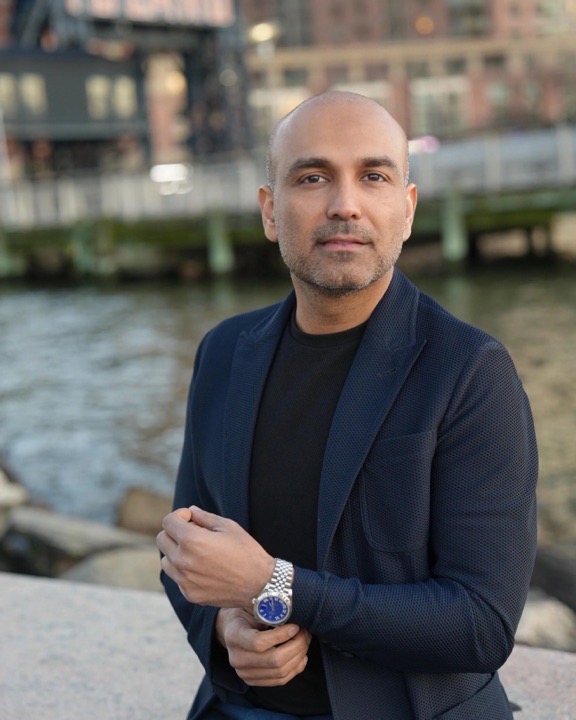
The fix is straightforward once you know it: side or angled light (45 degrees off-axis, sometimes called "Rembrandt lighting" in portrait work) rebuilds that shadow-highlight contrast artificially. It's why professional headshots and dating photography sessions almost never use flat, straight-on light — angled light sculpts the face regardless of your underlying bone structure. Golden hour sunlight (the hour after sunrise or before sunset) does this naturally outdoors, which is why so many great dating photos are shot at that time of day.
Contrast and Skin Tone: A Camera Setting Issue, Not a You Issue
Phone cameras auto-expose for the brightest thing in frame, which is usually the sky or a bright background — not your face. That means a lot of self-shot photos slightly underexpose the subject's skin, which reduces visible contrast and can make features look muddier and less crisp, especially for medium-to-deeper skin tones under warm indoor lighting. This is a metering problem, full stop. A camera (or a photographer) that exposes correctly for your face — not the background — immediately restores the sharpness and contrast that make a jawline, cheekbone, or eye shape read clearly in a thumbnail-sized dating app photo.
Dating apps are won or lost in a two-second glance at a thumbnail. If your lighting doesn't create contrast, your best features are invisible before anyone even reads your bio.
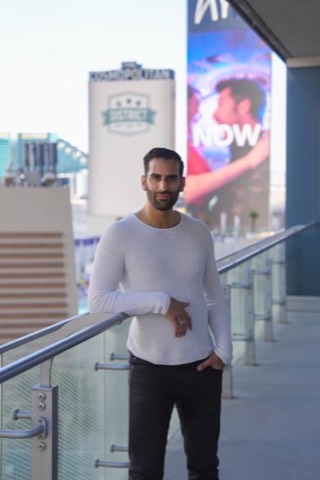
Fit Over Fabric: The Clothing Mistake That's Costing You Matches
I see this constantly: a genuinely fit, athletic guy wearing a t-shirt two sizes too big because it's "comfortable," and the photo reads as shapeless. Baggy clothing is one of the fastest ways to erase visible muscle tone, shoulder width, and waist definition in a photo — on any body type, but it's an especially costly mistake for men on the leaner or more compact end of the build spectrum, where a properly tailored fit is doing real visual work that an oversized fit completely cancels out.
This isn't about needing to look bigger than you are. It's about photographing accurately. A shirt that follows your actual shoulder line and tapers at the waist shows your real proportions. A shirt that hangs off you like a tent hides them — and on a small phone screen, "hidden" reads as "no shape at all," which is worse than whatever your actual build is.
- Get key pieces tailored. A $20 tailoring adjustment on the shoulders and sleeves of a jacket or button-down changes the entire silhouette of a photo. This is the highest ROI style move available to almost anyone.
- Layer with structure. A well-fitted overshirt, bomber jacket, or blazer adds visual shoulder width and breaks up a flat torso silhouette — useful for any build, but especially flattering for leaner frames.
- Watch sleeve and hem length. Sleeves that stop past the wrist bone and hems that bunch at the shoe read as "wearing someone else's clothes," which undercuts confidence signaling even if the photo is otherwise good.
- Pick color and pattern for contrast, not just taste. Solid, saturated colors (deep blues, burgundy, olive, black) tend to photograph with more contrast against most skin tones than washed-out pastels, which can flatten a photo under the same lighting conditions that already reduce contrast.
Grooming and Hair: Small Adjustments, Outsized Impact
Hair texture and styling norms differ across cultures, and what reads as "well put together" on Western dating apps skews toward a few specific signals: visible texture (not flat-ironed or overly gelled-flat), a clean, defined hairline or edge-up, and facial hair that's either fully clean or intentionally shaped — not in the ambiguous in-between stage that reads as "didn't get around to it." None of this is about changing who you are. It's about signaling grooming intentionality, because dating app users make trust and effort judgments in milliseconds, and hair is one of the first things they judge.
If facial hair grows in unevenly, a sharp, well-defined beard-neckline and cheek-line (even on light or patchy growth) reads as intentional. A blurry, undefined edge reads as neglect, regardless of how much hair is actually there. This is a five-minute grooming fix that changes how "put together" you look in every single photo from that day.
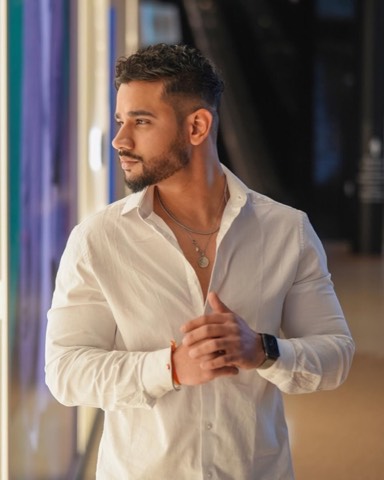
Posing and Body Language: The Confidence Signal Most Guys Get Wrong
Here's something I tell every client regardless of background: most men have never been taught how to stand for a camera, and it shows. Stiff, squared-up, arms-at-sides poses read as nervous or awkward, not confident — even when the guy in the photo is neither of those things in real life. Posing is a skill, not a personality trait, and it's the fastest thing to fix in a single session.
- Angle your body 30-45 degrees off-camera. A direct, squared-on stance reads as confrontational or stiff. A slight angle creates a more dynamic, relaxed line through the shoulders and torso.
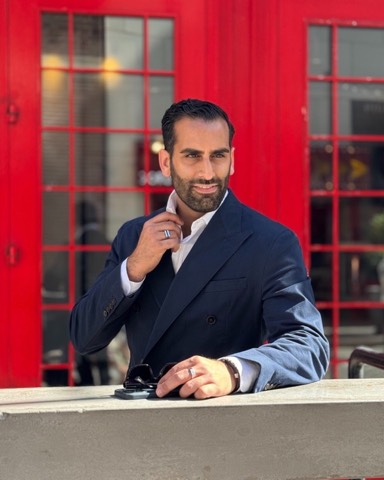
- Give your hands a job. In a pocket, holding a jacket, resting on a railing — idle hands at your sides is the single most common "amateur photo" tell.
- Drop the shoulders, lift the chin slightly. Tension lives in the shoulders and jaw. Dropping the shoulders half an inch and lifting the chin a few degrees changes the entire read of a face from tense to at ease.
- Practice a real half-smile. Full forced smiles often read as posed; dead stares read as cold. A relaxed half-smile with engaged eyes consistently tests as the highest-converting expression across dating app data.
This is exactly where working with a photographer who also coaches dating — instead of a generic portrait photographer — makes a measurable difference. A regular photographer will get you a technically nice photo. A photographer who has also spent over a decade coaching people through actual dating outcomes knows which specific micro-adjustments in posture, expression, and framing correlate with more matches and better opening messages, because that's the actual metric being optimized for, not just "does this look nice on a wall."
The Photo Set That Actually Works
Individual photo quality matters, but so does the composition of your whole profile. A common mistake: five photos that are all the same distance, same angle, same lighting, same outfit. Apps and swipers both reward variety because it signals a fuller, more real life.
- One sharp, well-lit close-up — shoulders up, clear eyes, good contrast lighting. This is your thumbnail photo and it needs to be the strongest technical shot in the set.
- One full-body shot in well-fitted clothing — this answers the unspoken question every swiper has and builds trust that your photos are accurate.
- One social or activity photo — doing something, not posing for something. This signals a life worth joining.
- One candid-style shot — genuine laugh, mid-motion, caught off guard. These consistently outperform posed shots for perceived authenticity.
- One photo with good environmental contrast — a background that doesn't compete with you (avoid busy patterns, cluttered rooms, or backgrounds that match your skin tone or outfit and flatten the whole frame).
The "Looksmaxxing" Conversation, Done Right
A lot of guys find their way into this topic through looksmaxxing forums and communities, and I get why — the instinct to systematically improve your presentation is a good one. But most of that content is either extreme (unnecessary surgery talk) or vague (just "be confident, bro"). The actual high-leverage looksmaxxing for dating apps has almost nothing to do with your bone structure and everything to do with the five things covered above: lighting, contrast, fit, grooming precision, and posing. These are the levers that move fastest and cost the least, and they're the same levers a professional dating photography session is built to pull.
I'd rather a client spend $300 on a proper photography session engineered around this than spend a year second-guessing their face. The math is not close. Photos are the entire first impression on every dating app — before your bio, before your job, before anything else about you gets a chance to land.
Common Mistakes I See Most Often in Consultations
When Asian clients come in for a session or a strategy call, these are the recurring issues I flag before we even pick up a camera:
- Only using front-camera phone selfies. Front cameras use wider lenses at close range, which distorts facial proportions — usually widening the nose and rounding the face in ways that don't match reality. A rear camera from a few feet back, or a real camera, eliminates this distortion entirely.
- Shooting under mixed color temperature light. Warm indoor bulbs mixed with cool phone flash or daylight from a window creates a muddy, unflattering color cast on skin. Pick one consistent light source.
- No height or scale reference in photos. Standing photos with nothing else in frame to judge scale against can undersell your actual presence. A doorway, a friend, furniture — anything that gives context reads more naturally.
- Group photos as the main photo. This is universal advice but doubly important here — if a swiper has to guess which guy you are, you've already lost the two-second window.
- Over-editing or heavy filters. Skin-smoothing filters read as insecurity and actively hurt trust; a match who meets you in person and sees a filtered gap will disengage fast. Correct exposure and contrast beats any filter.
What a Professional Session Actually Fixes in One Afternoon
This is the part that surprises most clients: none of the above requires months of gym time or a personality transplant. A two-hour session with the right lighting setup, two or three outfit changes, and posing direction from someone who knows what converts on dating apps can produce a completely different-performing profile using the same face and the same body that were getting ignored a week earlier. I've watched it happen dozens of times — same guy, same features, dramatically different match volume, because the photography finally did its job instead of working against him.
That's really the whole thesis here: your face was never the problem. Uncorrected lighting, unstructured clothing, ambiguous grooming, and untrained posing were doing the damage, and every one of those is a solvable, technical problem — not a permanent trait.
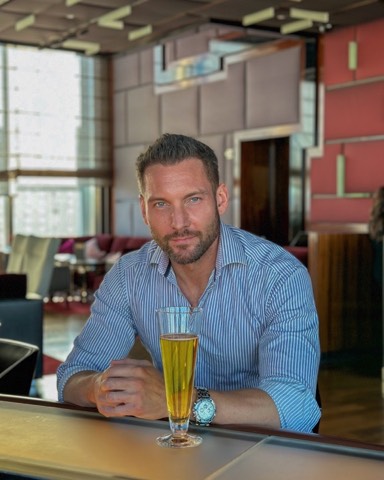
Backgrounds and Settings: The Context That Frames Everything
Where you shoot matters almost as much as how you're lit, and it's a detail most guys never think about until it's pointed out. A background that's visually busy — a cluttered apartment, a patterned wall, a crowded street — competes with your face for attention in a photo that only gets looked at for a second or two. Every extra element in frame is one more thing pulling focus away from the thing that actually needs to land the swipe: you.
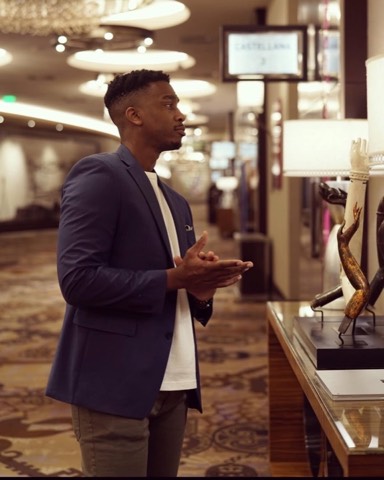
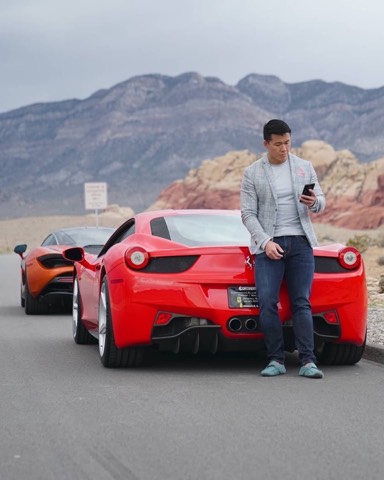
The fix isn't complicated. Clean architectural backdrops, open outdoor settings with depth (a street, a trail, a skyline), or a softly blurred background from shooting with the right lens all keep the visual focus exactly where it should be. This is also where location does real strategic work — a backdrop that's interesting without being distracting (city lights, desert landscape, an upscale rooftop) adds a layer of lifestyle signaling on top of the portrait itself. It's part of why so many dating photography sessions lean on cities with strong, varied backdrops within a short drive — more usable locations means more range across your final photo set without the day turning into a logistical headache.
One detail worth flagging specifically: avoid backgrounds that closely match your skin tone or outfit in color and value. When a background sits too close in tone to your face or clothing, the eye loses the edge separation that makes a subject pop, and the whole photo reads as flatter than it needs to be — the exact same contrast problem discussed earlier with lighting, just showing up architecturally instead of optically. A photographer who's thinking about this in advance will pick locations and times of day specifically to avoid it.
Addressing the Elephant in the Room: Does Ethnicity Actually Affect Match Rates?
I'll answer this directly because dancing around it doesn't help anyone. Multiple published studies on dating app behavior — OkCupid's own internal data releases among them — have shown measurable differences in response rates across demographic groups, and Asian men have shown up on the less favorable end of some of that data in the past. That's a real, documented pattern, and pretending it doesn't exist would be dishonest.
But here's what almost never gets discussed alongside that data: those studies were measuring outcomes from average, unoptimized, mostly self-shot profile photos across a huge population — not the outcomes of profiles that were deliberately engineered around lighting, contrast, fit, and posing by someone who understands both photography and dating psychology. Aggregate statistics describe what happens on average when nobody is doing anything differently. They don't describe the ceiling of what's actually achievable once the technical and strategic gaps get closed.
In years of running sessions and coaching clients through exactly this scenario, the swing in outcomes I've seen from fixing lighting, fit, grooming clarity, and posing alone is large enough that "ethnicity determines your match rate" stops being a useful way to think about the problem. It's closer to the truth to say that under-optimized presentation determines your match rate, and that variable is squarely in your control, regardless of what any aggregate study says about averages.
Building a Profile Strategy Around the Photos
Photos get the swipe. Everything else — your bio, your prompts, your opening messages — determines whether the match turns into a conversation and then a date. A dating coach's perspective matters here too, because plenty of guys fix their photos, get more matches, and then stall out at the conversation stage because nobody ever taught them how to open well or keep momentum. If you're going to invest in better photos, it's worth pairing that with at least a basic pass on your bio and messaging approach so the improved match rate actually converts into dates instead of just a bigger pile of unanswered matches.
This is also where the "photographer plus dating coach" combination earns its keep. A photographer alone gets you good images. A dating coach alone can sharpen your messaging but can't fix a profile where the photos are quietly working against you before a word is ever read. Doing both under one roof means the photos, the profile order, and the bio are all built toward the same goal — more matches, better conversations, actual dates — instead of three disconnected efforts.
Get a Profile That Reflects How You Actually Look and Carry Yourself
None of this is about changing your face or pretending to be someone else. It's about removing the technical noise — bad lighting, wrong fit, undefined grooming, stiff posing — that's been distorting how you show up in photos compared to how you actually look and carry yourself in person. Once that noise is gone, your real features, your real build, and your real presence get an honest shot at making the impression they're capable of making. I've built entire sessions around exactly this — engineering lighting, outfit, and posing choices specifically for what stops the swipe and starts the conversation, backed by over a decade of watching what actually converts to real dates, not just likes on a photo. If you want a second opinion on what's holding your current profile back, a free strategy call is a low-pressure way to find out exactly what's fixable before you book anything. And when you're ready to actually shoot it, that's what a Vegas Tinder Photography session is built to deliver — photos engineered around your real features, not around a stereotype of what they're supposed to be.
Want photos that actually get results?
Book a free strategy call — we'll map out exactly what your profile needs.
SCHEDULE FREE CONSULTATION