Style & Grooming
The Indian Man's Guide to a Dating Profile That Actually Converts
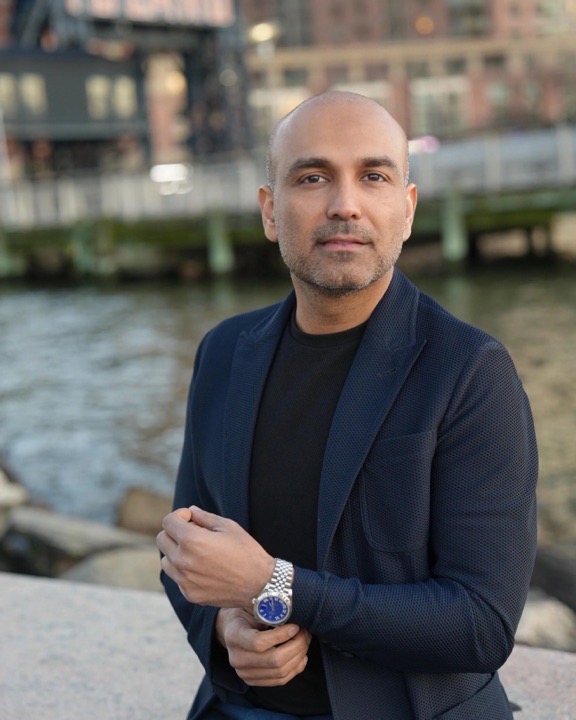
If you're an Indian man swiping and getting silence, the problem almost never lives where people assume it does. It's not your background, your name, or anything you can't change. It's usually something a lot more fixable: photos that don't show who you actually are, lighting that works against you, an outfit that blends into the background, or a profile that reads like a LinkedIn summary instead of an invitation. I've spent 15+ years behind a camera and 14+ years coaching people through the actual mechanics of dating apps, and the pattern is always the same — small, specific fixes move the needle far more than "just be yourself" ever will.
This guide is not about changing who you are. It's about presentation — the same way a great resume doesn't lie about your experience, it just presents it so a hiring manager stops scrolling. Dating app photography works on identical psychology. Someone swiping through fifty profiles in three minutes is making split-second, mostly subconscious decisions based on clarity, confidence, and context. Let's build a profile that gives you the best possible shot, starting with the fundamentals and working up to the strategy most men never think about.
Why Generic Advice Fails Indian Men Specifically
Most "improve your dating profile" content is written for a generic default user, and it quietly assumes things that don't apply universally — casual westernized wardrobe staples, certain hair textures, certain skin tones under certain lighting, certain cultural touchpoints in the background of photos. None of that is a knock on the advice; it's just incomplete. Lighting that flatters one skin tone can wash out or flatten another. A haircut that reads as "put-together" on one hair type can read as unstyled on another. A shirt color that pops against pale skin can disappear against deeper skin unless you know how to pick contrast correctly. This isn't about Indian men needing "extra work" — it's about needing advice that's actually calibrated to your features instead of generic advice that was never built with you in mind. Once you correct for that, you're not behind anyone. You're just finally getting advice that fits.
Your photos aren't supposed to look like everyone else's. They're supposed to look like the best, most confident version of you — engineered to stop the swipe, not blend into it.
Lighting: The Single Biggest Lever You're Not Pulling
If I could only fix one thing in 90% of the profiles I review, it would be lighting. Bad lighting doesn't just make a photo look amateur — it can flatten your features, create harsh shadows under the eyes, wash out skin tone, or make a decent outfit look cheap. Good lighting does the opposite: it adds dimension, sharpens jawlines, and makes skin look healthy instead of oily or ashy. For deeper skin tones specifically, a few lighting rules matter more than people realize:
- Avoid direct overhead sun. It creates harsh shadows under the brow and nose and can make skin look patchy. Aim for golden hour (the hour after sunrise or before sunset) or open shade.
- Side lighting and soft window light add depth. Flat, straight-on lighting (like a bathroom mirror selfie) removes all the dimension from your face. A single window with soft daylight, shot at a slight angle, does more for your jawline than any filter.
- Warm light beats cool light almost every time. Fluorescent office lighting or cool-toned LED bulbs can cast a greenish or blue tint that fights against warmer skin tones. Golden hour sunlight or warm indoor bulbs are far more forgiving.
- Never rely on flash as your main light. Direct flash flattens everything and creates glare, especially on skin with more natural oil production. If a photo needs flash to exist, it's the wrong photo.
This is exactly the kind of detail that separates a photographer who just "takes nice pictures" from one who understands what's actually happening to your specific features under specific light. It's also exactly why generic advice — or a friend with an iPhone — usually isn't enough. Lighting isn't a minor technical detail; it's the difference between a photo that gets swiped past and one that gets a like.
Wardrobe: Fit, Color, and Contrast Over Brand Names
Nobody is swiping right because of a logo. They're reacting to fit, color, and how put-together you look in under two seconds. Here's what actually moves the needle:
Fit Beats Everything
A $30 shirt that's tailored to your body will always outperform a $300 shirt that's baggy or boxy. Sleeves should end around the middle of your wrist. Shoulders seams should sit at your actual shoulder, not halfway down your arm. If you've never had anything tailored, taking two or three shirts to a local tailor for a quick fitted adjustment is one of the highest-ROI moves you can make before a photoshoot — often for less than the cost of a nice dinner.
Color and Contrast
Color choice matters more for deeper skin tones because contrast reads differently. As a general rule:
- Rich, saturated colors — deep blues, burgundy, forest green, charcoal, burnt orange — tend to make skin look vibrant and healthy rather than washed out.
- Pure white can sometimes overpower the frame in bright sun; an off-white or cream often photographs more naturally.
- Pastels and very light, low-saturation colors can sometimes flatten contrast against deeper skin tones — not off-limits, just worth testing against your specific tone before you build a whole shoot around them.
- Avoid busy patterns or logos across the chest — they distract from your face, which is the entire point of the photo.
Dress For the Life You Actually Want To Be Seen Living
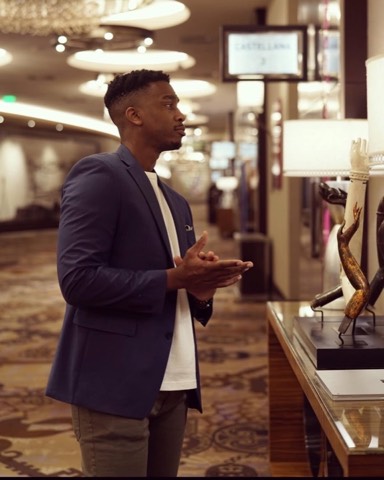
Your wardrobe in photos should mirror the range of a real dating profile — not five variations of the same blazer. One sharp, fitted outfit for a confident portrait. One casual, textured layer (jacket, henley, quality tee) for a lifestyle shot. One activewear or athletic-cut option if you train, hike, or play sports. Variety signals a full life, not just an event you dressed up for once.
Grooming: Beard, Hair, and Skin
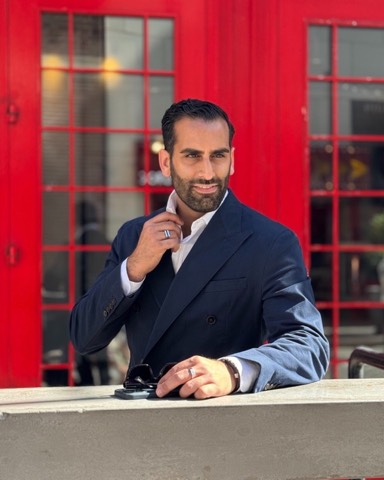
Grooming decisions are deeply personal, and there's no single "correct" look — clean-shaven, stubble, full beard, and turban or traditional styling can all photograph incredibly well. What matters is intention. A beard that's growing in random directions, unclear edges, or patchy without shaping reads as neglected even if that's not the case. A beard that's trimmed with clean, defined lines — even if it's still a full beard — reads as a deliberate style choice.
Beard Maintenance That Actually Shows Up In Photos
- Define your neckline and cheek lines. This single change makes more visual difference than any amount of length.
- Trim flyaways and stray hairs — they're invisible in the mirror but very visible in a sharp photo.
- Use a beard oil or balm the day of a shoot. It controls frizz and adds a subtle sheen that reads as "healthy" rather than "greasy" when done in moderation.
Hair
Whatever your style — short and tapered, longer and swept back, a modern fade, or traditional styling — the same rule applies: get it cut or trimmed 3-5 days before a shoot, not the day of. Fresh-off-the-chair haircuts often look slightly too sharp or stiff in photos; a few days lets it settle into how you actually wear it day to day.
Skin
Skin texture reads more clearly in photos than people expect, especially in good lighting. A simple routine in the two weeks before a shoot — consistent cleansing, moisturizing, and drinking enough water — reduces shine, evens out tone, and helps you avoid the "harsh flash" look even in soft light. If you deal with oiliness, blotting papers or a light matte moisturizer before shooting can prevent unwanted shine without looking overly made-up.
Posture and Body Language: The Silent Signal
This is the part almost nobody talks about, and it might matter more than the outfit. Posture and body language are read subconsciously in under a second — before anyone processes what you're wearing or where you are.
- Chest up, shoulders back, chin slightly forward and down. Most people's instinct is to tuck the chin in when nervous, which creates a double-chin effect even on lean guys. A slight forward-and-down chin tilt elongates the jawline.
- Weight on the back foot, one knee slightly bent. Standing flat-footed and squared to the camera reads as stiff. A slight weight shift instantly looks more natural and relaxed.
- Hands need a job. In a pocket, holding a jacket over one shoulder, resting on a railing, holding a coffee — idle hands at your sides read as awkward in almost every photo.
- Practice a real smile, not a camera smile. The easiest fix: think of something genuinely funny or good right before the shutter clicks. Genuine eye-crinkle smiles outperform posed ones in every test I've run with clients.
This is exactly where a dating coach's eye matters as much as a photographer's. A photographer alone might get you a technically well-lit photo of bad body language. A coach who also understands photography will catch that your shoulders are hunched or your smile isn't reaching your eyes — because they know what actually signals confidence to someone swiping, not just what looks sharp in RAW format.
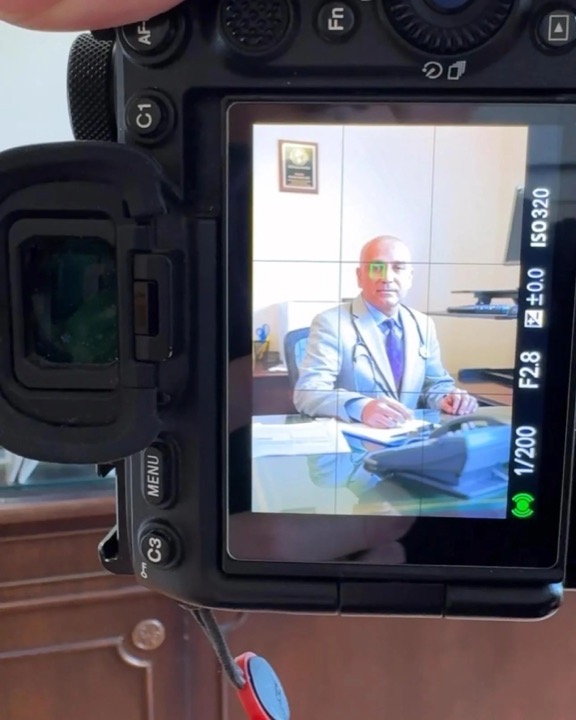
Photo Variety: Why One Great Headshot Isn't Enough
A common mistake: spending all your effort on a single flawless headshot and neglecting the rest of the profile. Apps like Hinge, Tinder, and Bumble reward — and their algorithms are increasingly built around — profiles with range. You need a mix that tells a complete story:
- One sharp, close-up portrait with clean lighting and direct eye contact. This is your anchor photo.
- One full-body shot that shows your build, your fit, and how you carry yourself. Skipping this is one of the most common — and costly — mistakes I see, because people notice its absence and assume you're hiding something.
- One or two lifestyle/activity photos — something that shows an actual interest (sport, hobby, travel, cooking, whatever's real to you) rather than telling people about it in your bio.
- One social or group photo where you're clearly the focal point — proof you have a life and friends, without looking like you're hiding in the background of someone else's photo.
- One candid or in-motion shot — walking, laughing, mid-conversation. Candid-style photos consistently outperform posed ones because they read as more authentic, even when they're actually well-directed by a photographer.
This is where dating app photography becomes a genuinely different skill set from portrait or headshot photography. A portrait photographer optimizes for one flawless image. Tinder photography, Hinge photography, and Bumble photography require optimizing for a whole set — six to eight images that work together to answer the questions a stranger is silently asking as they swipe: What does he look like from multiple angles? What's his life actually like? Would a conversation with him be fun?
Background and Setting: Context Does Half the Work
Where you're photographed communicates almost as much as how you're photographed. A cluttered bedroom, a bathroom mirror, or a dim hallway undercuts even great lighting and wardrobe. Aim for locations that add context without competing for attention:
- Clean architectural backdrops (a textured wall, an interesting doorway, city streets) that add visual interest without clutter.
- Natural settings — parks, trails, waterfronts — that photograph well in golden hour light and suggest an active lifestyle.
- A couple of "elevated" locations — a rooftop, a nice restaurant patio, a well-designed interior — that suggest you know how to show up for a good date.
- Somewhere that's actually part of your life, not a random stock-photo-looking location. Authenticity reads, even subconsciously.
If you're in Las Vegas, this city genuinely works in your favor — the light, the architecture, and the backdrops give a photographer a lot to work with, from the Strip's skyline to red rock landscapes twenty minutes outside downtown. It's part of why dating photography sessions here tend to produce such varied, high-performing photo sets.
The Profile Itself: Photos Get the Swipe, Words Get the Reply
Great photos earn the right swipe. But the bio and prompts are what convert a match into an actual conversation — and this is where a lot of otherwise strong profiles fall apart.
Skip the Resume Bio
"Software engineer. MBA. Love to travel and try new restaurants." This tells someone nothing they can respond to. Compare that to: "Will absolutely argue that biryani rules supreme over every other rice dish — fight me about it on a first date." One gives someone a job description. The other gives someone something to reply to.
Give People Something To Respond To
Every line in your bio or prompts should function like a conversation starter, not a statement. Specific beats generic every time — "I've hiked in fourteen national parks and I'm not stopping" beats "I love hiking." Specificity signals a real person with real opinions, which is inherently more interesting than a highlight reel of adjectives.
Let Your Photos and Words Work Together
If a photo shows you cooking, your bio shouldn't also just say "I like cooking" — use the space to add something the photo can't show, like a strong opinion about the right way to make a specific dish. Redundancy wastes valuable profile real estate that could be doing more work for you.
Common Mistakes I See Most Often — And How to Fix Them
- Only formal or professional photos. A profile full of suits and blazers reads as trying too hard, or worse, like a corporate headshot that wandered onto the wrong app. Mix in casual, textured, lived-in photos.
- Group photos as the main photo. Nobody should have to guess which person you are. Save group shots for photo three or four, never the first slot.
- Sunglasses in every photo. Eye contact builds trust and attraction fast — hiding your eyes in most or all of your photos removes one of your strongest tools.
- Old photos. If your best photo is five years and fifteen pounds ago, it sets up a bad first impression on the actual date. Current, accurate photos build trust before you've even met.
- No variety in expression. Six photos of the exact same closed-mouth half-smile reads as stiff. Mix genuine laughs, subtle smirks, and relaxed neutral expressions.
- Filters and heavy editing. Skin-smoothing filters are increasingly easy to spot and tend to erode trust rather than build it. Clean, well-lit, unfiltered photos consistently outperform over-edited ones.
Why Working With Someone Who Understands Both Photography and Dating Strategy Changes the Outcome
Here's the honest truth: a talented general photographer can make you look good in a single image. But dating app photography is a different discipline entirely — it's not about the single best photo, it's about engineering a set of six to eight images, in the right order, that work together with a profile to produce actual matches, actual conversations, and actual dates. That requires understanding the psychology of swiping behavior, not just knowing how to use a camera. That's the gap I built Vegas Tinder Photography to close. I'm not just a photographer who happens to shoot dating profiles — I'm a dating coach with 14+ years of experience who also has 15+ years behind the camera, so every shot is planned around what actually gets a right swipe and what actually starts a real conversation, not just what looks nice in isolation. For Indian men specifically, that also means understanding lighting, contrast, and styling choices that are genuinely calibrated to your features rather than applying generic advice that wasn't built with you in mind. If you're not sure where your current profile is falling short, that's exactly what a free strategy call is for — a quick, no-pressure conversation about what's working, what isn't, and what a real plan looks like before you invest in a shoot.
Location and Setting: How Vegas-Specific Backdrops Can Work in Your Favor
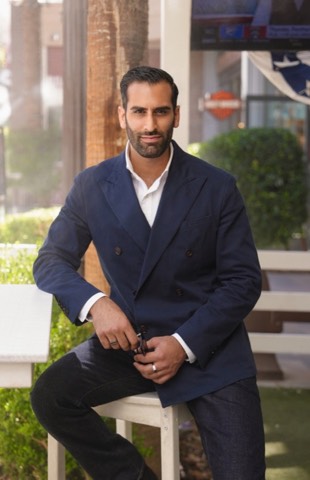
One detail that rarely gets discussed in dating profile advice is how much the location itself contributes to the story your photos tell. A profile shot entirely against one apartment wall or one generic park bench tells a swiper almost nothing beyond what you look like standing still. A profile shot across two or three genuinely different settings — a clean architectural backdrop, an outdoor setting with depth and light, an upscale interior or rooftop — signals range, and range reads as an interesting, active life before a single word of your bio gets read.
This is one of the reasons Las Vegas works so well as a base for this kind of photography specifically. Within a short drive you've got desert landscapes, a dramatic skyline, resort architecture, and warm, reliable light for most of the year — enough visual variety to build a full six-photo profile without repeating the same backdrop twice. For deeper skin tones specifically, warm desert light at golden hour is particularly forgiving and flattering, adding richness rather than washing things out the way flat midday sun or cool indoor lighting often does.
Bringing It All Together: A Realistic Timeline
None of this needs to happen all at once, and trying to fix everything in a single week usually backfires. A realistic sequence looks something like this: get a haircut or beard trim about three to five days before you plan to shoot, so it settles in naturally. Pick out two or three outfits ahead of time and get anything baggy tailored at least a few days in advance — tailoring appointments often take longer than people expect. Book a session with a photographer (or block out a few hours if you're doing it yourself) during golden hour, and scout two or three locations in advance so you're not wasting shooting time figuring out where to stand.
On the profile side, draft your bio and prompts separately from the photo selection process, then review them together once both are done — this is where you catch redundancy between what a photo already shows and what your words are repeating unnecessarily. Give yourself a day or two of distance before finalizing anything; profiles built and published in one sitting tend to have more of these small misalignments than ones reviewed with fresh eyes after a short break.
Your Next Move
None of this requires becoming a different person. It requires presenting the person you already are with better lighting, better fit, better body language, and a profile that gives people an actual reason to reach out. Small, specific changes — the ones outlined above — consistently outperform vague advice like "just be confident," because they're things you can actually control and act on this week. If you've been getting matches but no conversations, or conversations that fizzle before a date gets booked, the fix is rarely a personality overhaul. It's almost always the photos, the framing, and the words doing less work for you than they could be. That's a fixable problem, not a permanent one. Book a free strategy call, and let's figure out exactly what your profile needs — then build a shoot engineered around getting you more matches, better conversations, and more dates that actually happen.
Want photos that actually get results?
Book a free strategy call — we'll map out exactly what your profile needs.
SCHEDULE FREE CONSULTATION