Why It Works
Why a Regular Photographer Will Tank Your Dating Profile (And What a Dating Photographer Actually Does Differently)
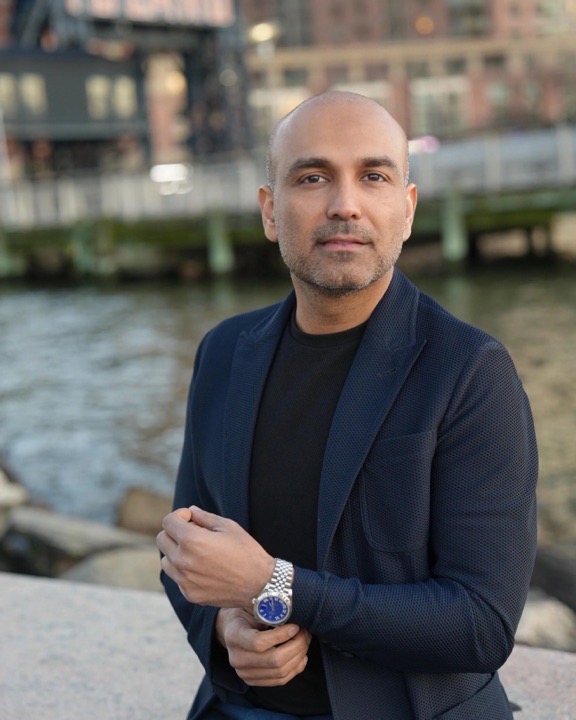
You've seen the photo. Gray seamless backdrop. Arms crossed. Chin tilted down, eyes up, that faint "I mean business" half-smile every LinkedIn headshot photographer in America has been trained to produce. It's a technically excellent photograph. Sharp focus, even lighting, flattering retouching. It would crush it on a corporate "About Us" page.
On Tinder, it dies in under a second.
This is the disconnect nobody explains to you before you book a session: a great photo and a great dating photo are not the same product. They are judged by different people, in different mental states, using different criteria, in a different amount of time. A regular photographer — even a genuinely talented one — is trained and rewarded for producing the first thing. Dating apps only pay off on the second. That gap is why so many smart, attractive, successful people spend $400 on a "professional photoshoot," upload the results to Hinge, and watch their match rate barely move.
I'm Mike. I've spent 15+ years behind a camera and 14+ years as a dating coach, and I built Vegas Tinder Photography specifically because I got tired of watching good people get out-swiped by worse-looking people with smarter photos. This article is the case for why dating photography has to be treated as its own discipline — and why the person taking your pictures should understand swipe psychology as deeply as they understand aperture.
The One-Second Problem: Why "Nice Photo" Isn't the Bar
Here's the part most photographers never internalize because it's not their world: on Tinder, Hinge, and Bumble, your primary photo gets judged in roughly the time it takes to read this sentence. Not evaluated. Not considered. Judged, instantly, by a thumb that's already moving toward the next card. There's no context, no bio read first in most cases, no benefit of the doubt. Just a flash reaction — swipe or don't.
A traditional portrait photographer is solving a completely different problem: how do I make this person look polished, credible, camera-ready in a still frame that will sit next to text describing who they are? That's a headshot's job. It supports a narrative that's already being read — a resume, a bio, a company page. Dating photography has no such luxury. The photo is the entire pitch before anyone reads a word. It has to generate curiosity, warmth, and attraction on its own, instantly, with zero supporting context.
That means the entire brief changes:
- A headshot photographer optimizes for polish. A dating photographer optimizes for a gut reaction in the viewer's stomach, not their brain.
- A headshot photographer wants you looking capable and composed. A dating photographer wants you looking like someone worth texting.
- A headshot photographer is judged by whether the client likes the photo. A dating photographer should be judged by whether strangers swipe right on it.
Those are not the same skill, even though both involve a camera, a subject, and good lighting. You wouldn't hire a wedding photographer to shoot a product catalog. You shouldn't hire a headshot photographer to shoot your dating profile, either — the end use is that different.
A resume photo has to survive a read. A dating photo has to survive a glance.
What "Nice" Photography Actually Signals on a Dating App (And It's Often Bad)
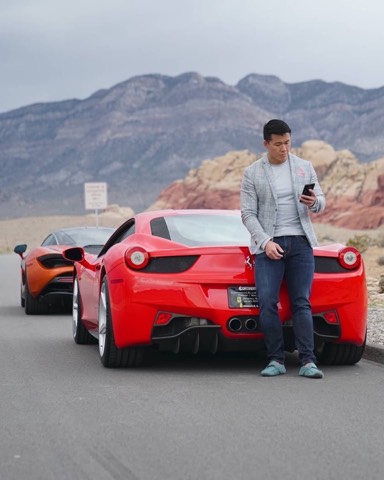
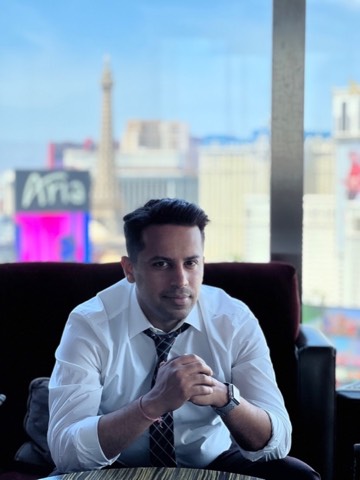
This is the part that surprises people the most: on dating apps, photos that are too polished frequently underperform. Studio lighting, a seamless backdrop, a stiff three-quarter pose, symmetrical retouching — all the hallmarks of "professional photography" as most photographers define it — read on Tinder and Hinge as one of two things: a corporate photo that's out of place, or, worse, a red flag that screams "catfish" or "this photo is fake." Daters on these apps have been burned before. Overproduced photography triggers suspicion, not attraction.
What actually converts is authenticity signaling — photos that feel candid even when they're carefully directed, that show a real environment and a real life, and that read as unmistakably current and unmistakably you. This is a genuinely counterintuitive skill for someone trained in traditional portraiture, because it inverts the goal. The traditional photographer is taught to eliminate anything that looks unplanned. Dating photography needs the opposite: the appearance of the unplanned, engineered on purpose.
A dating photographer has to intentionally build in the texture of a real life — the coffee shop, the hiking trail, the dog, the friend group, the hobby that actually tells a story — while still controlling light, angle, and expression well enough that the photo is flattering. That's a harder needle to thread than a studio session, not an easier one. It requires understanding what reads as "authentic" to a stranger swiping fast, which is a psychology question, not a lighting question.
Social Proof Cues Most Photographers Don't Even Know to Look For
Dating psychology research and years of field-testing consistently point to the same pattern: photos that include credible, subtle social proof — you laughing mid-conversation with a friend, you in a group where you're clearly the connector, you doing something that signals status or social ease — outperform solo studio portraits, especially for men. This isn't about the photo looking "nicer." It's about the photo answering an unconscious question every swiper is asking: is this person actually liked by other people, or just liked by a camera?
A generalist photographer, hired for a single one-hour session, has no framework for engineering that. They don't know to ask you to bring a friend for one setup. They don't know why a photo of you mid-laugh, slightly off-center, beats a perfectly symmetrical smile shot. They're not thinking about social proof at all — they're thinking about composition and light. Both matter. Only one of them was on their radar going in.
Why Dating Coaching Experience Changes What Happens Behind the Camera
Here's the piece that actually separates a dating photographer from a photographer who occasionally shoots dating profiles: what happens in the thirty seconds before the shutter clicks.
Almost nobody is naturally comfortable in front of a camera. Most people, when told "just be yourself, relax," freeze up, and the resulting photos look exactly like what they are — someone trying to look relaxed. A photographer with no coaching background handles this the only way they know how: technical direction. "Chin down. Turn your shoulders. Look here, not there." That fixes the geometry of the shot. It does nothing for what's actually radiating off your face, and on a dating app, what's radiating off your face is the entire product.
Fourteen years of dating coaching means I'm not giving you posing instructions in a vacuum — I'm reading you the way I'd read a client in a coaching session, figuring out in real time what actually makes you light up, what makes your shoulders drop and your real smile show up instead of the camera smile, and directing toward that. Sometimes that's a joke. Sometimes it's asking about the dumbest thing that happened to you this week. Sometimes it's talking through exactly what kind of person you're trying to attract and letting that intention change how you're standing. That's coaching technique applied through a lens, not photography technique applied to a nervous subject.
This matters because the single biggest visual difference between a photo that gets swipes and a photo that doesn't is rarely lighting or outfit — it's authentic expression. Anyone can learn to spot a fake smile. Everyone does it instinctively, in a fraction of a second, without even trying. A photographer who doesn't understand how to actually get a real reaction out of a subject is, structurally, capped at producing technically nice photos of someone looking slightly uncomfortable. That ceiling is low, and it's exactly the ceiling most dating profile photos hit.
Real-Time Coaching vs. "Hold Still and Smile"
There's a version of this job where the photographer shows up, sets up lights, says "okay, smile," fires off a hundred frames, and hands you a gallery. That's a transaction. What actually moves a profile from ignored to inundated with matches is direction — active, in-the-moment coaching on micro-expression, eye line, posture, energy, even the pacing of conversation between shots to keep you loose instead of posed. That level of direction only comes from someone who has spent thousands of hours reading attraction cues in real interactions, not just through a viewfinder.
This is also where dating coaching experience pays off in a way that has nothing to do with the camera at all: knowing what different photos need to communicate to different audiences. A photo intended to attract someone looking for a serious relationship needs different energy than a photo aimed at a more casual dating pool. A coach who's spent over a decade helping people understand what they're actually signaling versus what they think they're signaling brings that lens to every frame.
One Great Photo Isn't a Profile — It's a Trap
This is maybe the most overlooked failure mode in dating photography, and it's almost entirely a byproduct of hiring a generalist. A traditional photography session is built around producing a small number of "hero shots" — the two or three images from the whole shoot that are technically flawless and that the photographer is proudest of. That's the right goal for a headshot, where you need exactly one great image.
A dating profile needs six. And it needs those six to do six different jobs.
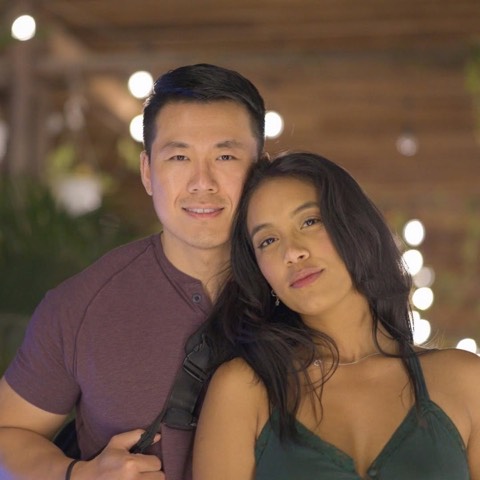
Tinder, Hinge, and Bumble all reward — and increasingly, algorithmically favor — profiles with variety: a strong close-up that stops the scroll, a full-body shot that answers the unspoken "what do they actually look like" question daters always have, a social photo that proves you have a life and friends, an activity or hobby photo that gives someone an actual conversation opener, a candid that shows real personality, and often a photo that hints at lifestyle or travel. Each image is answering a different question in the viewer's head. Miss one category and you leave a doubt unresolved — and unresolved doubt on a dating app doesn't get benefit of the doubt, it gets a left swipe.
- The stopper: a tight, high-quality shot built to win the split-second judgment and get the profile opened at all.
- The proof shot: full body, well-lit, no tricks — because ambiguity here reads as insecurity or deception, and it's one of the fastest ways to get reported or unmatched.
- The social proof shot: you with other people, ideally mid-interaction, signaling you're liked and socially embedded.
- The story shot: a hobby, a passion, a setting that gives a match something specific to message you about instead of "hey."
- The personality shot: genuine, a little goofy or a little bold, breaking the polish and proving you're a real, textured human.
- The closer: often a lifestyle or aspirational frame that rounds out the range without repeating what's already been shown.
A generalist photographer, left to their own instincts, will hand you a gallery full of variations on the same setup — same outfit, same location, same three expressions — because their brain is trained to chase the single best frame, not to architect a set. A dating photographer with coaching experience is thinking about the full profile as a narrative arc before the first photo is even taken: what does match number one need to see, what does the third photo need to prove that the first two didn't, what's the story this whole set tells in fifteen seconds of scrolling. That's profile strategy, not photography. It requires understanding how people actually browse and message on these platforms, which is coaching knowledge, not camera knowledge.
Tinder, Hinge, and Bumble Aren't the Same App — And Your Photos Shouldn't Be Either
Another blind spot for generalist photographers: treating "dating profile photos" as one undifferentiated product. It isn't. Tinder, Hinge, and Bumble have meaningfully different cultures, different pacing, and reward slightly different things.
Tinder photography leans harder on the instant visual hook, because Tinder's browsing behavior is the fastest and most volume-driven of the three — you need a primary photo that wins in a fraction of a second, full stop. Hinge photography has more room to breathe because the platform is built around prompts and multiple photos getting individual engagement, so storytelling and personality across the set matter more relative to any single "best" shot. Bumble photography sits somewhere in between, but with an added layer, because women message first there, which means photos need to actively invite a conversation opener, not just look good passively.
A photographer who's never studied these platforms as behavioral systems will shoot one generic gallery and let you sort it into all three apps yourself. Someone who treats dating photography as its own specialty — and who's coached actual daters through actual conversations on all three platforms — builds the shot list knowing which images are going to lead on which app, and why.
The Technical Skills Still Matter — They're Just Not the Whole Job
None of this is an argument that photography fundamentals don't matter. They absolutely do. Lighting that flatters your actual features instead of a generic ideal, composition that draws the eye correctly, color grading that looks natural on a phone screen rather than a gallery wall, retouching that's invisible rather than obvious — all of that is table stakes, and it's exactly why "just have a friend take some photos on their iPhone" also fails most people. Bad lighting and bad composition will tank a profile just as fast as an over-posed studio shot will.
The point isn't that technical photography skill is unimportant. It's that technical skill alone gets you a nice-looking, wrong-optimized photo. You need both halves: the camera craft to make sure the image itself is genuinely well-shot, and the coaching-and-psychology layer to make sure what's being captured is the version of you that actually converts strangers into matches and matches into dates. Most photographers have half of that toolkit. Most dating coaches have none of the camera half. The overlap is small — and that overlap is the entire value proposition of a specialized dating photographer.
What "Engineered to Convert" Actually Looks Like in Practice
I don't just take nice pictures — I engineer images around the exact psychology of what makes someone swipe right, because I've spent 14+ years watching what actually gets a response and what gets ignored, across thousands of real conversations and real dates, not just theory. That means during a session I'm making calls a pure photographer wouldn't even think to make: which outfit reads as "put together" versus "trying too hard" for your specific target demographic, which locations signal the right lifestyle cues for the kind of relationship you're actually looking for, which of your natural expressions reads as confident versus which reads as guarded, and how to sequence the shoot so you loosen up instead of getting more self-conscious as it goes.
Then it goes further than the shoot itself — into which images to actually use, in which order, on which app, because a great photo in the wrong slot still underperforms. That's the strategic layer a camera-only professional simply isn't trained to provide.
What This Actually Costs You If You Get It Wrong
It's worth being blunt about the real cost of hiring the wrong kind of photographer here, because it's not just a wasted afternoon. It's opportunity cost measured in actual dates you didn't get. Every week your profile sits there underperforming is a week of matches that didn't happen with people you might have genuinely clicked with — compounding, because most people don't retest or rebuild their profile often. They shoot it once, assume the photos are the problem-solved part of the equation, and then spend months wondering why the algorithm or the app or "dating in this city" is broken, when the actual issue was six technically fine, strategically wrong photos uploaded a year ago and never revisited.
That's the quiet cost of treating dating photography like a commodity service: not a bad photo, just a mediocre outcome stretched out over months you don't get back.
How a Session Actually Works When Coaching and Photography Are Combined
In practice, a dual-expertise session looks different from a standard photoshoot from the very first conversation. Before any camera comes out, there's a real discussion about who you're trying to attract, what's worked and what hasn't in your dating life so far, which app or apps you're prioritizing, and what your current profile might be getting wrong — the same diagnostic conversation I'd have in a pure coaching session. That context shapes every choice that follows: locations, outfits, shot list, even the order we shoot in.
During the shoot, direction is constant and specific rather than generic. Not "look natural" — which is nearly impossible advice to actually act on — but real-time coaching cues that get a genuine reaction, tested and adjusted shot by shot based on what's actually landing on the camera's LCD screen, not guessed at after the fact.
Afterward, the job isn't done at delivery of a gallery. It's curating and sequencing the final set specifically for the platforms you're using, so what gets uploaded isn't just "your best photos" but a strategically ordered set built to do a specific job on Tinder, Hinge, or Bumble.
And because the whole approach is rooted in coaching, not just photography, that conversation doesn't have to end when the shoot does. This is exactly why I offer a free strategy call before booking anything — so we can talk through your specific situation, what's not working in your current profile or dating life, and whether this approach actually makes sense for you, before you spend a dollar.
Who This Isn't For
To be fair to traditional photographers: if you need a headshot for LinkedIn, a corporate bio, or a professional portrait for work, hire a headshot photographer. That's genuinely their specialty, and I'd say the same thing a dating-focused photographer would never optimize for in that context — the polish, the formality, the credibility signaling that a boardroom context actually rewards. The whole argument here isn't "generalist photographers are bad." It's that dating apps are a specific, measurable, psychologically distinct context, with their own rules, their own split-second judgment window, and their own definition of what "good" even means. That context deserves a specialist, the same way a courtroom deserves a litigator and not a generalist attorney.
The Real Question to Ask Before You Book Anyone
If you're about to book a dating profile photoshoot with anyone — me or someone else — the question that actually matters isn't "do they have a nice portfolio." Most photographers do. The question is: do they understand why one photo gets swiped past and an almost-identical photo gets a match? Can they explain, specifically, what makes a photo read as authentic instead of staged, what social proof looks like in an image, why variety across a profile matters more than any single perfect shot, and how Tinder, Hinge, and Bumble actually differ in what they reward? If the answer is technical camera talk about lenses and lighting and nothing about psychology, matches, or actual dating outcomes, you're hiring a portrait photographer for a job that isn't portrait photography.
That distinction is the entire reason Vegas Tinder Photography exists as something separate from a standard photography studio. Fifteen-plus years of learning how to make a camera flatter a real, unposed human being, combined with fourteen-plus years of learning what actually creates attraction, conversation, and connection between real people — that combination is the product, not the camera work alone and not the coaching alone.
If your current profile photos are technically fine and still not converting into matches and dates, the photos probably aren't the problem in isolation — the strategy behind them is. That's exactly what a free strategy call is for: no obligation, just an honest look at what's working, what isn't, and whether a dating-photography approach built around real coaching experience is the fix your profile actually needs. Book the call, bring your current profile, and let's figure out — together — what's actually costing you matches, and build a set of photos engineered to stop the swipe instead of getting lost in it.
Want photos that actually get results?
Book a free strategy call — we'll map out exactly what your profile needs.
SCHEDULE FREE CONSULTATION